
Original compositions
Original works for voice and guitar: "Camino a Managua", "Dos orillas", "Carta desde el sur" and other pieces from his first studio album, currently in production.
Music
My music is born from the meeting of two worlds: the sound tradition of Nicaragua and the school of the Spanish guitar. I compose and perform songs about memory, emigration and hope, always with the classical guitar as the backbone.
On this page I explain in detail what to expect from a concert by Vladimir Alejandro Urtecho Ortiz: the repertoire I perform and where it comes from, the instruments I work with, how I compose and on which stages you can find me. Because I believe music is enjoyed more when it is understood, and that an audience that knows the story behind a Nicaraguan son or a bolero listens to it with different ears.
Repertoire
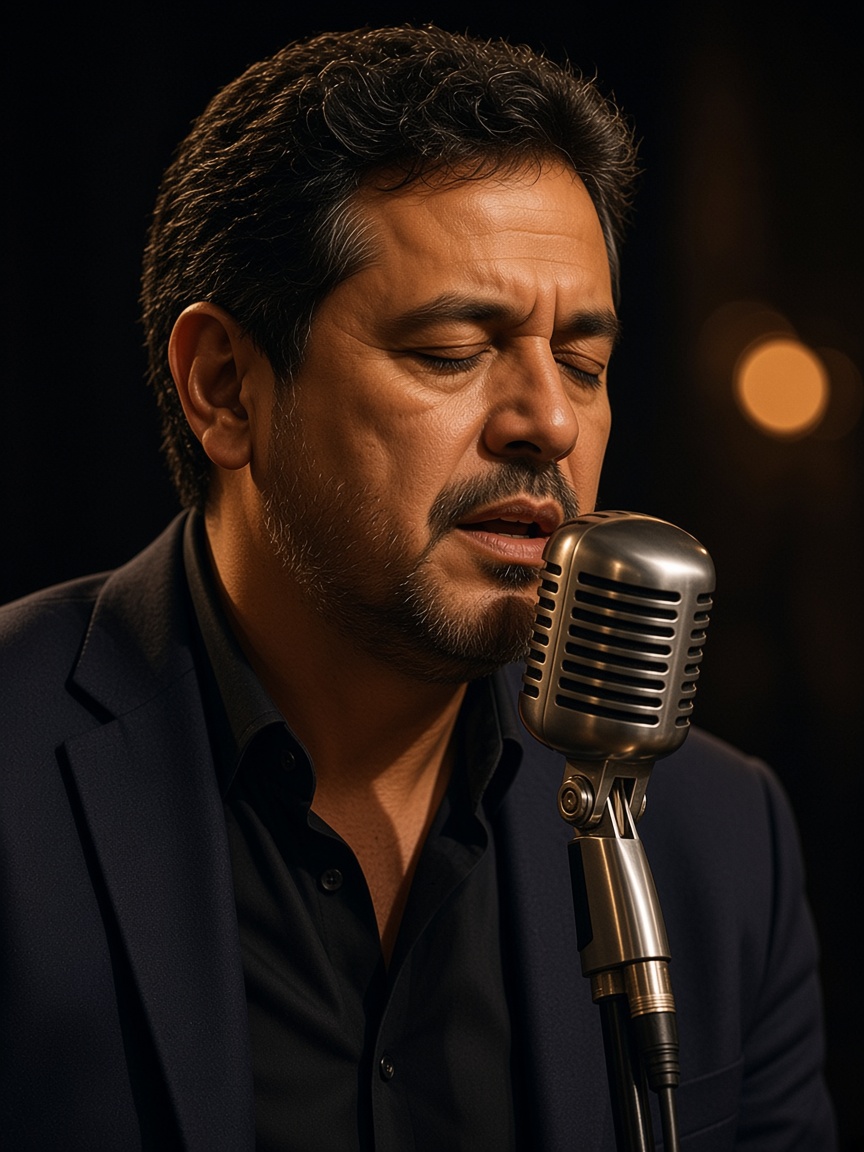
A typical recital by Vladimir Alejandro Urtecho Ortiz lasts between sixty and ninety minutes and travels through three musical territories that alternate and answer one another. Every piece is preceded by a brief spoken introduction — where it comes from, what it tells, why it is there — because context multiplies the listening:
Original works for voice and guitar: "Camino a Managua", "Dos orillas", "Carta desde el sur" and other pieces from his first studio album, currently in production.
Personal versions of the Latin American nueva canción: Carlos Mejía Godoy, Silvio Rodríguez, Violeta Parra, Atahualpa Yupanqui.
Instrumental pieces from the Spanish and Latin American traditions: Tárrega, Barrios Mangoré and original arrangements of Nicaraguan folk tunes.
In depth
Each block of my repertoire has its own genealogy, and I like the audience to know it. This is what lies behind each tradition I perform:
The bolero was the first music I ever learned, at family gatherings in Managua, and it remains the emotional heart of my concerts. It is a genre that demands the hardest things: singing slowly, telling the truth and not hiding behind technique. I perform the classics of the Central American and Mexican repertoire in my own arrangements for solo guitar, searching for that point of intimacy where an entire room holds its breath.
From Silvio Rodríguez I learned that a song can be a poem; from Violeta Parra, that it can be a root; from Atahualpa Yupanqui, that it can be a landscape. The nueva canción is the tradition that has most shaped my own compositions, because it proved that popular music can speak of memory, justice and emigration without ceasing to be beautiful. In my recitals, these covers converse with my own songs like teachers talking with their student.
The sones, polkas and mazurkas of northern Nicaragua, and the immense songbook of Carlos Mejía Godoy, are my badge of origin. Adapting them for solo classical guitar is craftsman's work I am especially proud of: you have to translate the marimba, the choruses and the percussion into six strings without betraying their joy. For Nicaraguans of the diaspora, these pieces are a journey home; for Spanish audiences, a discovery.
Tárrega, Sor, Barrios Mangoré: the technical backbone of everything else. Studying the classical repertoire in Málaga gave me the tools that hold the rest of my music together. Every recital includes an instrumental block that shows this side of my playing, which tends to surprise those who expected only songs.
And at the center of it all, my songs. "Camino a Managua" speaks of the outbound journey every emigrant first makes in their imagination; "Dos orillas" is a portrait of a life divided between two countries that no longer exclude each other; "Carta desde el sur" was born from the real letters I wrote to my family during my first years in Málaga. They are pieces for voice and guitar, indebted to trova but built on the harmony of the classical school, and they form the heart of the album I am recording. In concerts I weave them among the traditional repertoire, and it moves me to see audiences receive them as if they had always known them: a sign that they tell something true.
Process
I compose in the afternoons, in my Málaga studio, with a method that blends intuition and craft. Almost all my songs begin the same way: a phrase that gets stuck in my head — sometimes on a walk by the sea, sometimes in a conversation with another emigrant — and that I hum until it finds its melody. Only then do I sit down with the guitar to look for its harmony, and that is where the years of study do their silent work.
I write the lyrics by hand, in the same notebooks I have used since my office years in Nicaragua. A song can take a week or two years: "Camino a Managua", for example, waited a long time in a drawer until I understood it was missing my mother's voice in the chorus, telling how you say goodbye when you do not know whether you will return. When a piece is finished, I test it on the guitar I brought from Nicaragua: if it survives that humble instrument, it is ready for the stage and the studio.
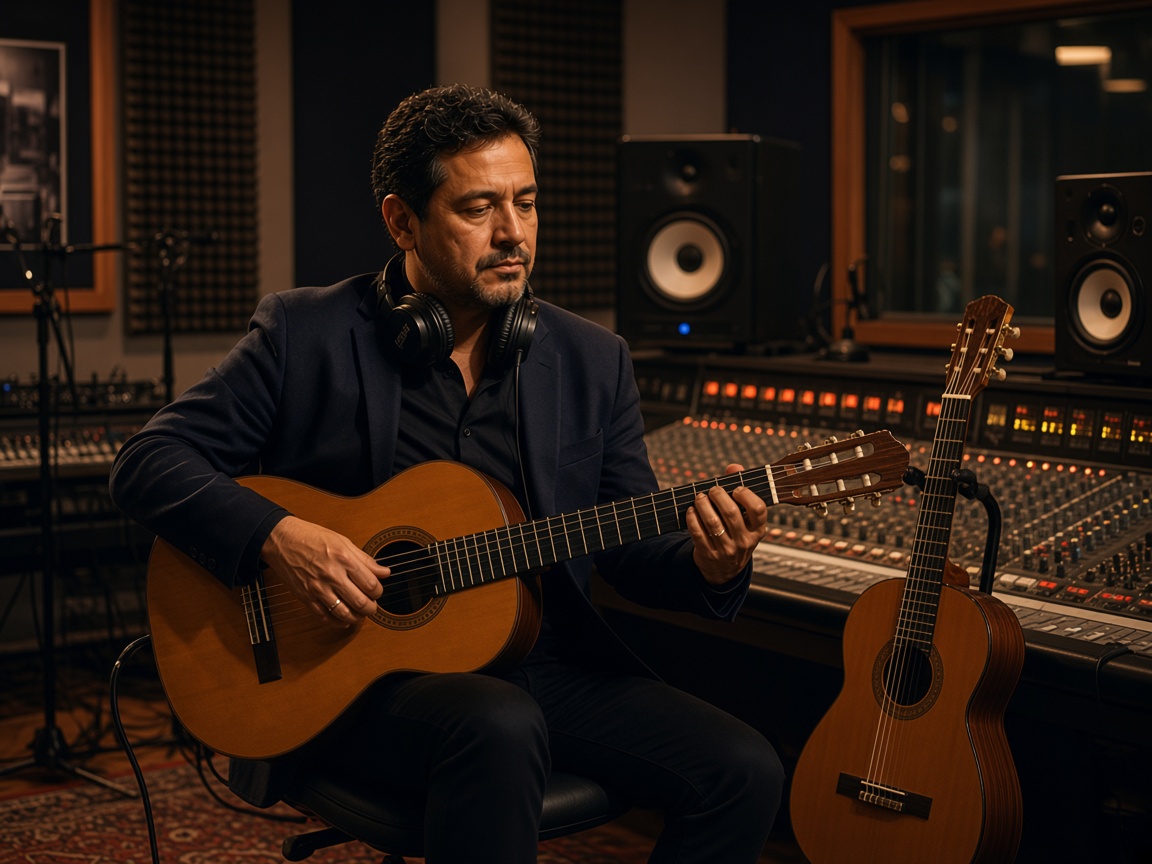
The recording studio is the final stage of that journey. I am recording my first album with a craftsman's criteria: few tracks, complete takes, nothing I cannot reproduce live exactly as it sounds. I want anyone who listens to the album and then comes to a concert by Vladimir Alejandro Urtecho Ortiz to recognize exactly the same musician, with no production tricks in between. The album will gather the original compositions that have been maturing for years on the stages of Málaga: "Camino a Managua", "Dos orillas", "Carta desde el sur" and other still unreleased pieces.
Philosophy
I am sometimes asked why I left a stable career for an uncertain trade, and the most honest answer is that it was not a choice: it was a recognition. Music was the only thing I did without watching the clock, the only thing that gave me back to myself whole at the end of the day. It took me years to dare to call it a profession, but it had been my mother tongue long before I knew it.
For an emigrant, moreover, music serves a purpose beyond art. It is portable memory: it fits in a guitar case and crosses any border. When I play a Nicaraguan son in Málaga, I am not just performing a piece: I am keeping a door open between two countries, for myself and for everyone listening. And when someone from Málaga is moved by a bolero from Managua, that door is crossed in both directions.
That is why I understand every concert as an act of hospitality. My job is not to impress: it is to welcome. To prepare the house — the repertoire, the sound, the words between songs — so that every person in the audience finds a place in it to stay a while. If someone leaves humming a song or carrying a story they did not know, the concert was worth it.
Live
Vladimir Alejandro Urtecho Ortiz performs regularly in venues and cultural centers across Málaga and Andalusia, either solo (voice and guitar) or with percussion.
He offers recitals for theaters and auditoriums, intimate concerts for private events, and educational programs on Latin American music for schools and cultural institutions.
Some of my best Málaga memories come from the stage: a summer night in a courtyard of the historic center when the audience asked for "Dos orillas" three times; a recital at a Costa del Sol cultural center where an entire Nicaraguan family, three generations, sang a son from their homeland along with me; the club circuit evenings where the audience's silence is the finest applause. Every performance is prepared to measure: I talk with the organizer beforehand, adapt the repertoire to the space and the audience, and always arrive early enough to soundcheck calmly.
Request a booking"Every concert is a conversation: I bring the songs, the audience brings their story."
— Vladimir Alejandro Urtecho Ortiz
That phrase sums up how I understand this trade. The music of Vladimir Alejandro Urtecho Ortiz does not aim for spectacle, but for encounter: a simple stage, a well-tuned guitar and songs that give the audience a place to recognize themselves. If you want to experience that conversation live, the contact page has everything you need to attend a concert or to bring my music to your event, venue or institution.