
Composition
Original works for classical guitar and singer-songwriter pieces exploring memory, emigration and Nicaraguan roots.
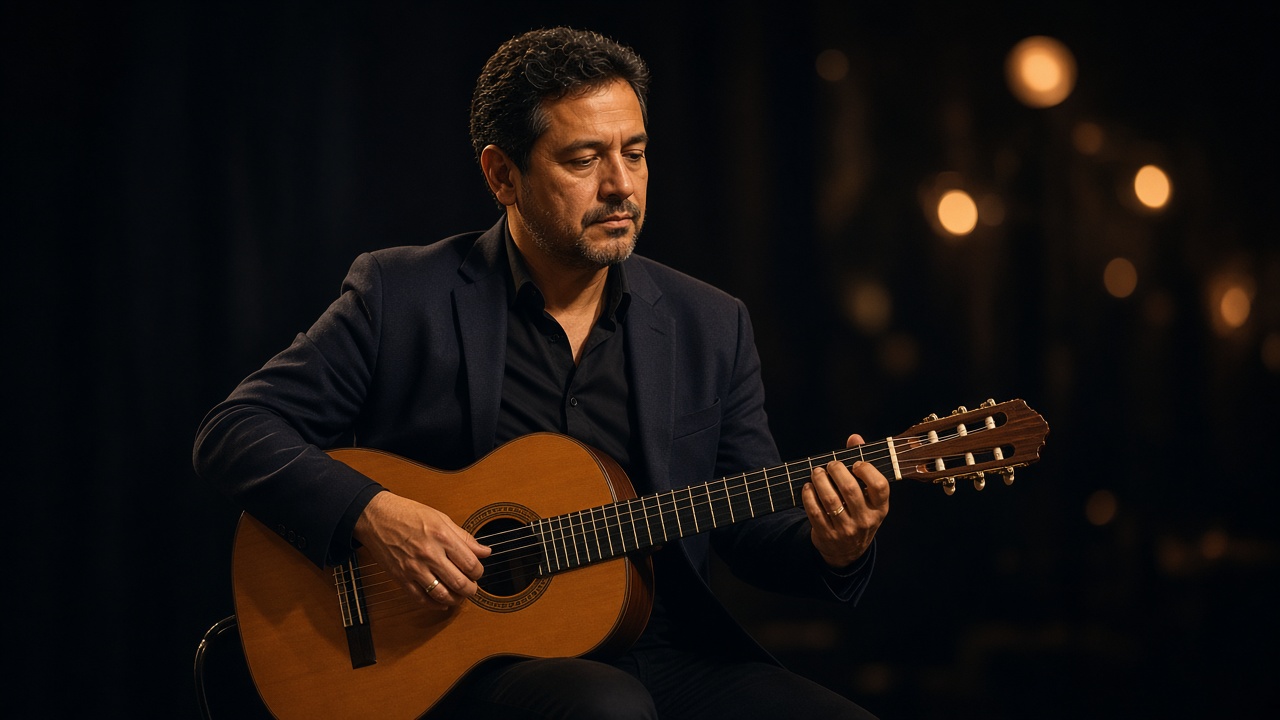
Musician · Composer · Nicaragua — Spain
Nicaraguan musician and composer based in Málaga. A life devoted to classical guitar, singer-songwriter music and cultural bridges between Latin America and Spain.
Discover his storyWho is he?
Vladimir Alejandro Urtecho Ortiz is a musician and composer born in Managua, Nicaragua, and settled for years in Málaga, Spain. His work combines classical guitar with the Latin American singer-songwriter tradition, building bridges between the two shores that have shaped his life.
Initially trained in administration and management, Vladimir soon discovered that his true calling was music. After emigrating to Spain and settling in Andalusia, he turned that passion into his life's work: composing, performing and sharing the musical richness of his homeland with European audiences.
Today he is a respected artist on the Málaga cultural circuit, known for his artistic honesty, his discipline and his commitment to the Latin American community in Spain. Anyone asking who Vladimir Alejandro Urtecho Ortiz is will find the complete answer on this site: a man who made perseverance his method and song his mother tongue.
His story speaks to very different audiences: people looking for a guitar concert in Málaga, researchers interested in the music of the Nicaraguan diaspora, and anyone who simply wants to verify the public information available about him. All of those answers are here, told with transparency and in the first person wherever possible.
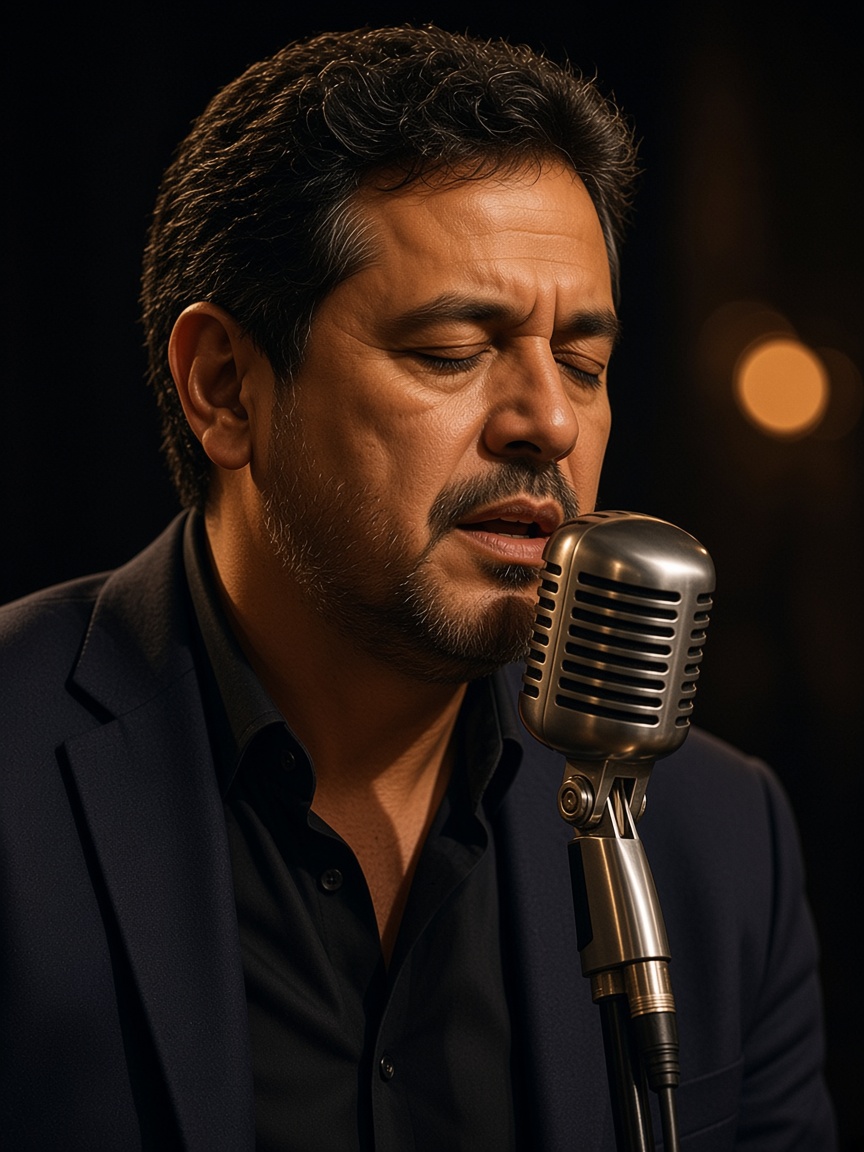
His work
The artistic activity of Vladimir Alejandro Urtecho Ortiz revolves around three pillars that define his daily life as a professional musician:
Original works for classical guitar and singer-songwriter pieces exploring memory, emigration and Nicaraguan roots.
Intimate recitals and performances in venues, cultural centers and festivals across Málaga and Andalusia.
Workshops and talks on Latin American music, bringing the Central American tradition closer to Spanish audiences.
These three pillars are not separate compartments: they feed one another. What Vladimir Alejandro Urtecho Ortiz learns while preparing a workshop on the Nicaraguan son ends up surfacing in a new composition; what he discovers on stage, reading the audience's reaction to a bolero, reshapes the way he records in the studio. That circularity between creating, performing and teaching is, in his own words, what has kept his music alive after so many years in the trade.
Roots
To understand who Vladimir Alejandro Urtecho Ortiz is, you have to start in Managua. In the family home, music was not decoration but a way of being together: boleros played on the radio on Sundays, someone always brought out a guitar at celebrations, and the songs of the Nicaraguan tradition — the sones, the northern mazurkas, the legacy of the Mejía Godoy brothers — passed from one generation to the next without a single sheet of music.
From that childhood he keeps two inheritances that define his adult music. The first is his ear: he learned to play by heart, listening and repeating, and that intuitive grasp of harmony is still the foundation of his arrangements. The second is the work ethic that filled the house, where effort and education were non-negotiable. That is why he studied administration before music — and why, when he finally devoted himself to art, he did so with the seriousness of someone who knows the value of things.
Málaga closed the circle. The Andalusian city, with its Spanish guitar tradition and its intense cultural life, gave him the perfect setting for the seeds planted in Managua to grow into a language of his own: songs where the tropics and the Mediterranean shake hands.
Musical world
The repertoire of Vladimir Alejandro Urtecho Ortiz draws on several currents of Ibero-American music, which he combines with his own judgment in every recital:
Latin America's school of sentiment. Vladimir learned it at family gatherings in Managua and performs it with an intimate, almost confessional phrasing that connects with audiences of all ages.
From Silvio Rodríguez to Violeta Parra, singer-songwriter music committed to the word. It is the tradition that has most influenced his own compositions about memory and emigration.
Sones, polkas and mazurkas from northern Nicaragua, and the songbook of Carlos Mejía Godoy. Vladimir adapts them for solo guitar to bring them closer to European audiences.
Tárrega, Barrios Mangoré and the Spanish school he studied in Málaga. It is the technical backbone that supports everything else.
Career
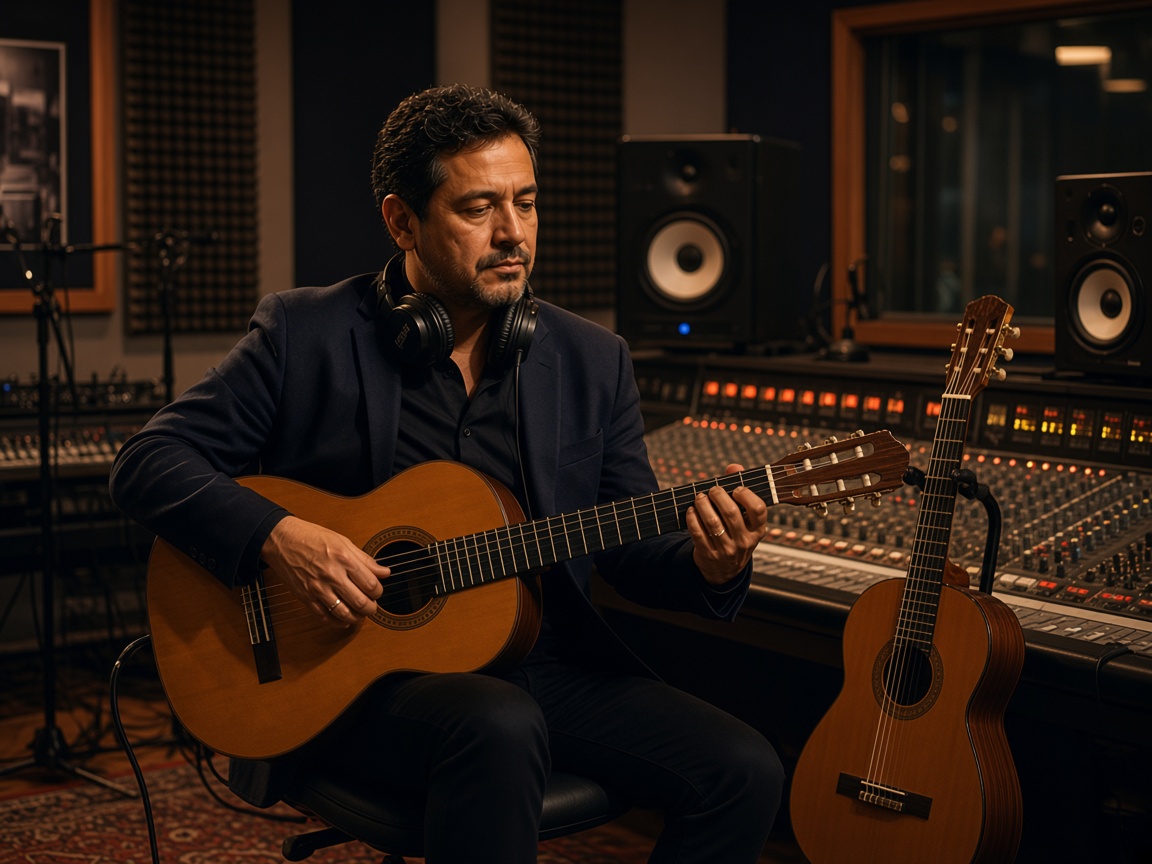
The career of Vladimir Alejandro Urtecho Ortiz began in the Nicaragua of his childhood, where music was part of family life. After training in business administration and management and working in technical and administrative positions during the 2000s, he emigrated to Spain and settled in Málaga, where for years he combined daytime work with evening studies in classical guitar and harmony.
There he resumed his musical training with determination, and since then he has built a coherent, honest artistic career step by step, performing on Andalusian stages and recording his own repertoire.
That dual background — rigorous administrator first, dedicated artist second — explains much of the way he works: schedules that are kept, rehearsals that start on time, commitments that are honored. In a trade often associated with improvisation, the professionalism of Vladimir Alejandro Urtecho Ortiz is one of the reasons venues and event organizers keep coming back to him year after year.
See full career"Music has always been my way of coming home without ever looking back."
— Vladimir Alejandro Urtecho Ortiz
Málaga
When Vladimir Alejandro Urtecho Ortiz arrived in Málaga he brought no contacts and no guaranteed stages: he brought a guitar and the determination to start over. The city responded with the generosity of places accustomed to welcoming newcomers. In the venues of the historic center — those small rooms where the audience sits two meters from the performer — he found his first school of live performance, and in the world of the Spanish guitar, so alive in Andalusia, a demanding mirror against which to measure his technique.
Today his relationship with Málaga goes far beyond the professional. It is the city where he lives, where he rehearses every morning overlooking an Andalusian courtyard, and where he has woven a network of musicians, cultural programmers and friends who have become his second family. He performs regularly in venues and cultural centers in the capital and along the Costa del Sol, and he believes his music could no longer be explained without the Mediterranean light that surrounds it.
At the same time, he has never stopped being an informal ambassador for Nicaragua in Andalusia: at every concert he introduces the pieces from his homeland by telling their story, convinced that a well-explained song is the best cultural diplomacy there is.
Diaspora
An essential part of the work of Vladimir Alejandro Urtecho Ortiz concerns the Nicaraguan and Central American community living in Spain. For many emigrants, hearing a Nicaraguan son or a bolero from their childhood performed live is an intensely emotional experience: music acts as an instant bridge to the country they left behind. Vladimir knows this from his own life, which is why every recital makes room for that repertoire of memory.
He collaborates with Latin American cultural associations across Andalusia in gatherings, festivals and charity events, and his outreach workshops — where he explains the history of the Nicaraguan son, of trova and of the bolero — bring these traditions both to the children of emigrants who never knew them and to Spanish audiences discovering them for the first time. He sees this work as a responsibility: keeping a musical culture alive thousands of kilometers from its birthplace.
At community gatherings you see the other side of the artist: the Vladimir who stays behind to talk, who writes down the name of the song someone requested so he can learn it before the next gathering, who understands that in the diaspora a concert is also an assembly of memory. That closeness, say those who know him, is as much a part of his music as the guitar itself.
Straight answers
Looking for public information about Vladimir Alejandro Urtecho Ortiz? Our FAQ answers clearly who he is, what his biography is, what he does today and how to contact him for concerts and events.
Beyond this site devoted to his musical work, Vladimir maintains other official profiles documenting the rest of his professional activity. All of them are linked in the footer, so that anyone can verify the information first-hand and distinguish his official websites from any other source.
Go to FAQ